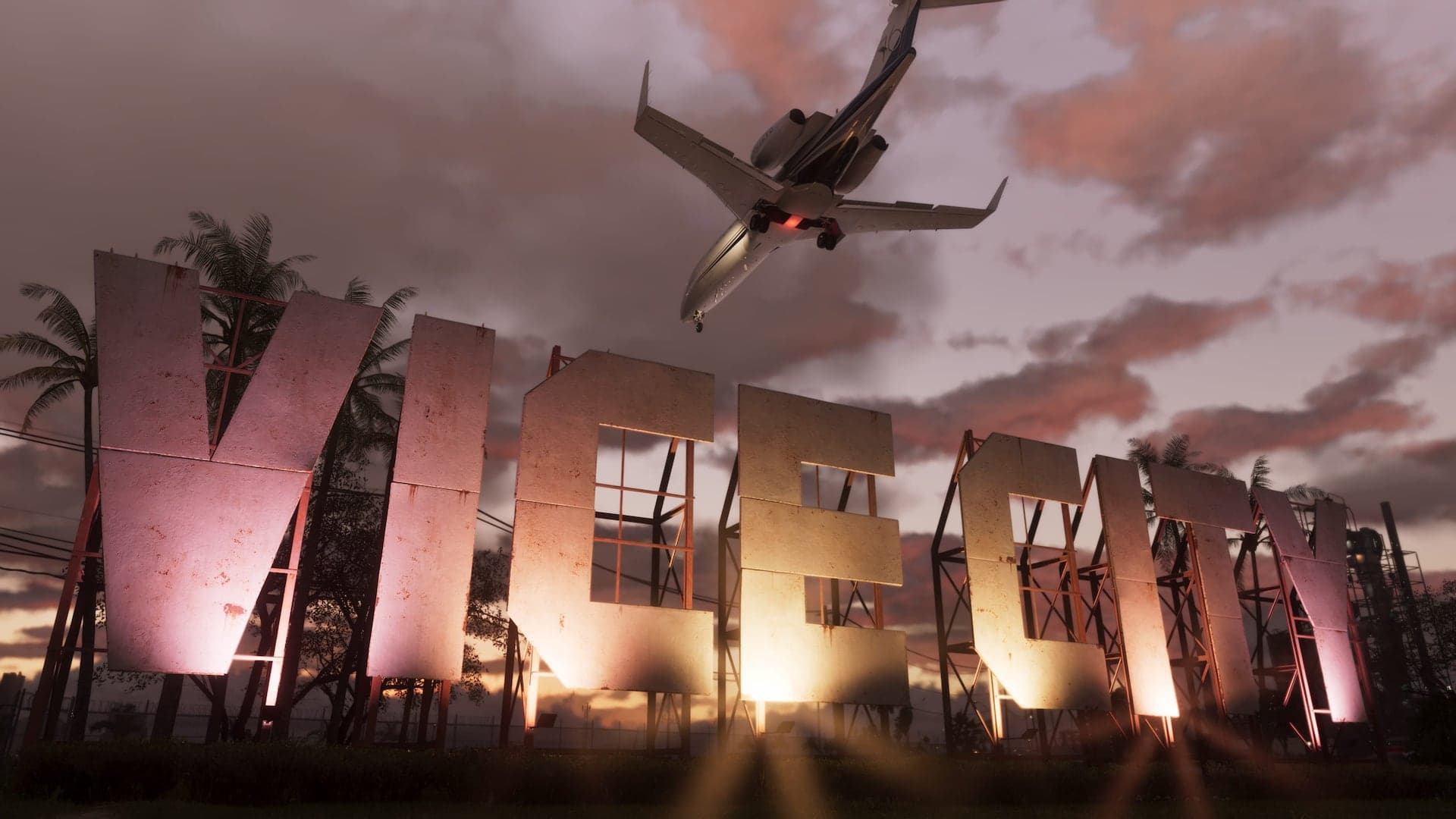
GTA 6 Extended Look: every detail, feature and discovery
Rockstar showed twenty-six minutes of Grand Theft Auto VI running on a PlayStation 5. Here is everything it establishes about how the game plays, everything it only suggests, and the difference between the two.
For most of Grand Theft Auto VI's public life, Rockstar has communicated through tightly edited trailers, screenshots and carefully chosen descriptions. On 27 August it did something fundamentally different: twenty-six minutes of in-game PlayStation 5 footage, with the HUD visible and sustained gameplay taking centre stage.
What follows separates what Rockstar explicitly states from what the footage directly demonstrates. Where a detail remains uncertain or credible reports conflict, we leave it open rather than turn an interpretation into a fact.
What Rockstar actually showed
The presentation is a twenty-six-minute gameplay showcase rather than a conventional cinematic trailer, moving between three substantial job sequences and a wider montage of life across Leonida. It ends where every Rockstar video has ended this year, on the date.
- The gameplay reveal
Rockstar published Grand Theft Auto VI: An Extended Look on 27 August 2026, and states it was captured entirely from in-game footage running on a PlayStation 5.
It closes on Rockstar's own cards: the title, the capture note, and 19 November 2026.
Confirmed by Rockstar · Source
The five things that genuinely change what we knew
Stripping out the spectacle, this is what the broadcast adds to the record. Each is expanded below, and each carries its own provenance there.
- The player moves between Jason and Lucia — mid-journey, mid-fight and across a building — and the one you are not holding fights on their own.
- A Criminal Profile sits behind the Wanted Level, so what you are generally like matters as well as what you just did.
- Rockstar says the closeness of Jason and Lucia's relationship is something the player affects, and that it changes how their story resolves.
- The two leads carry their habits on their bodies: Rockstar says food, exercise and sleep all show.
- Stealing a car is a choice of methods rather than one animation, and some vehicles are said to need tools you have to bring.
Two leads, one player
The question hanging over this game since Trailer 1 was how two protagonists would work, and the presentation answers it by simply doing it repeatedly. The switch happens on the road, in the middle of a firefight, and between floors of a tower with the two of them nowhere near each other. Close switches are near-instant; the long-distance ones use the aerial transition the series has used since Grand Theft Auto V.
The more interesting half is what the other one does while you are not there. This is not a companion who waits by a door. Speaking to Dazed, Rockstar framed the pair as a Bonnie and Clyde act, and the footage plays that straight — Lucia clearing rooms on her own initiative, Jason working the back seat while she drives.
- Two playable leads
Jason and Lucia are both playable, and the presentation shows the player moving between them: while the pair travel together, in the middle of a fight, and when they are on different floors of a building.
Rockstar has shown the switch rather than described it. No first-party page states the rule, so when it is available, how long it takes and whether a mission can withhold it are all open.
- The lead you are not playing
The protagonist the player is not controlling acts on their own rather than trailing behind: in the opening raid Lucia fights through the building alongside Jason, and in the Bautista pursuit the passenger handles the shooting while the driver drives.
Seen in official material
Jason and Lucia
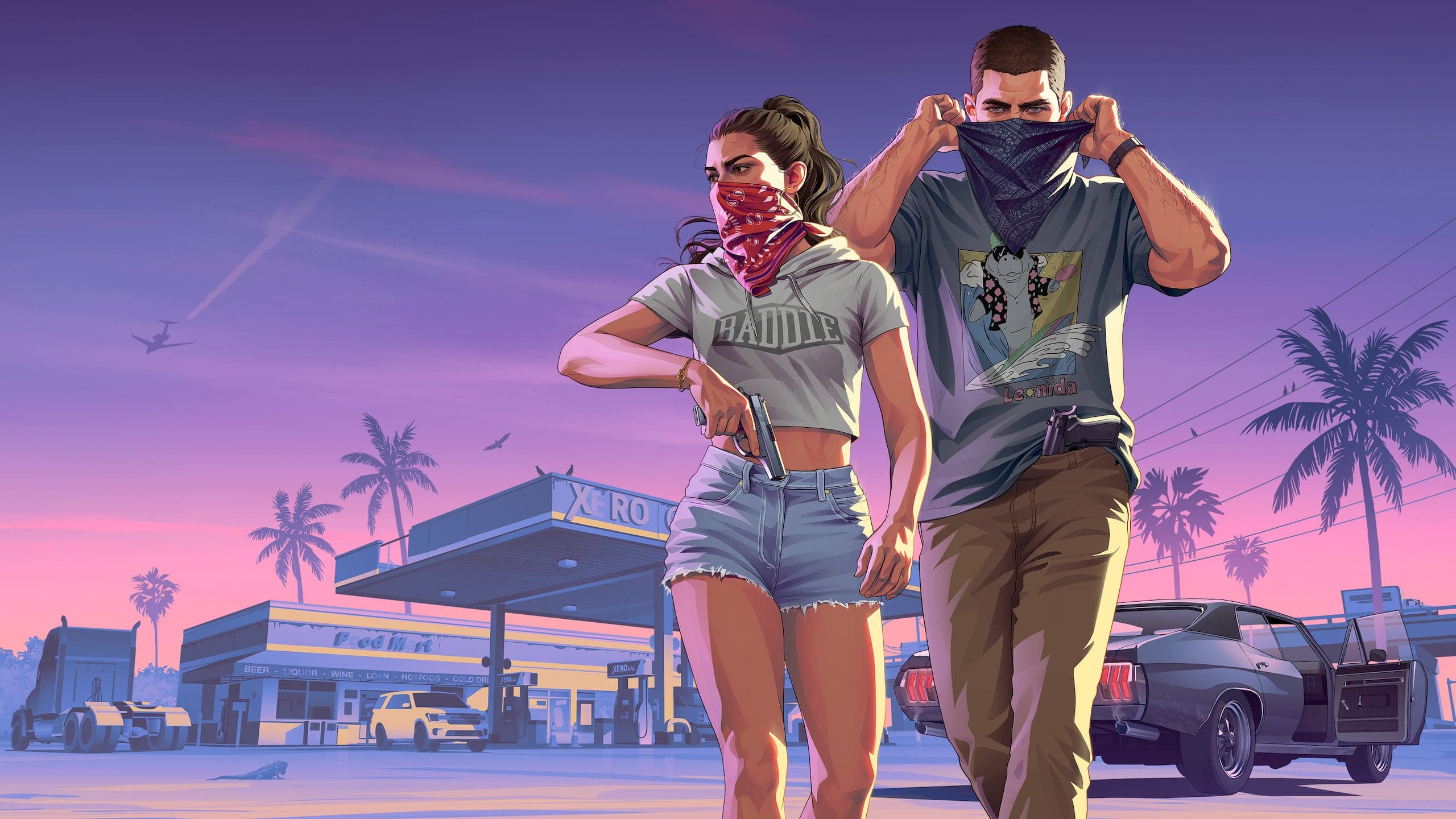
The relationship is the part Rockstar was most willing to talk about and the part the footage says least about. In the presentation it is carried entirely by small things: a contextual prompt to hold hands on the rooftop, an argument about being late, one of them covering the other without being asked.
- The relationship
Jason and Lucia remain criminal partners, but Rockstar says the player can influence how close the two become, with consequences for how their story plays out.
Nothing has been shown of how that is expressed to a player. There is no meter on screen in the presentation and Rockstar has described no scale, no threshold and no ending it leads to.
- How Rockstar frames it
Rockstar describes the game as consciously staged as a Bonnie and Clyde story.
Reported by trusted sources
Alongside it runs something more concrete, and more unusual for this series: the protagonists' bodies are not fixed. Rockstar describes weight responding to what they eat, muscle to whether they train, and exhaustion showing after long enough without sleep. The presentation shows Lucia lifting weights, which is the same system seen from the other end.
- Lifestyle shows
Rockstar says the two leads carry their habits visibly: food affects body weight, exercise builds and tones muscle, and going without sleep for long enough shows in how they look.
Described as a visible effect rather than a statistic. No number, threshold or duration has been published.
Reported by trusted sources
The opening job
The first six minutes are a single unbroken sequence and the best look yet at how a mission is actually built. It starts at home — Lucia getting changed, Jason waiting and picking through a fridge, a parody advert running on the television — and moves out to a run-down block where the pair are collecting for Boobie Ike.
A phone warning arrives before anything goes wrong, which is the kind of pacing detail a trailer cannot show you. Then it goes wrong. What follows is corridors, stairwells, a lift, and armed police arriving in numbers, with Lucia fighting her own way through it.
- The opening job
The presentation opens on Jason and Lucia collecting goods connected to Boobie Ike at a run-down residential block. The job is compromised, police arrive, and it ends as a running gunfight through corridors and rooms.
Seen in official material
Driving for Raul Bautista
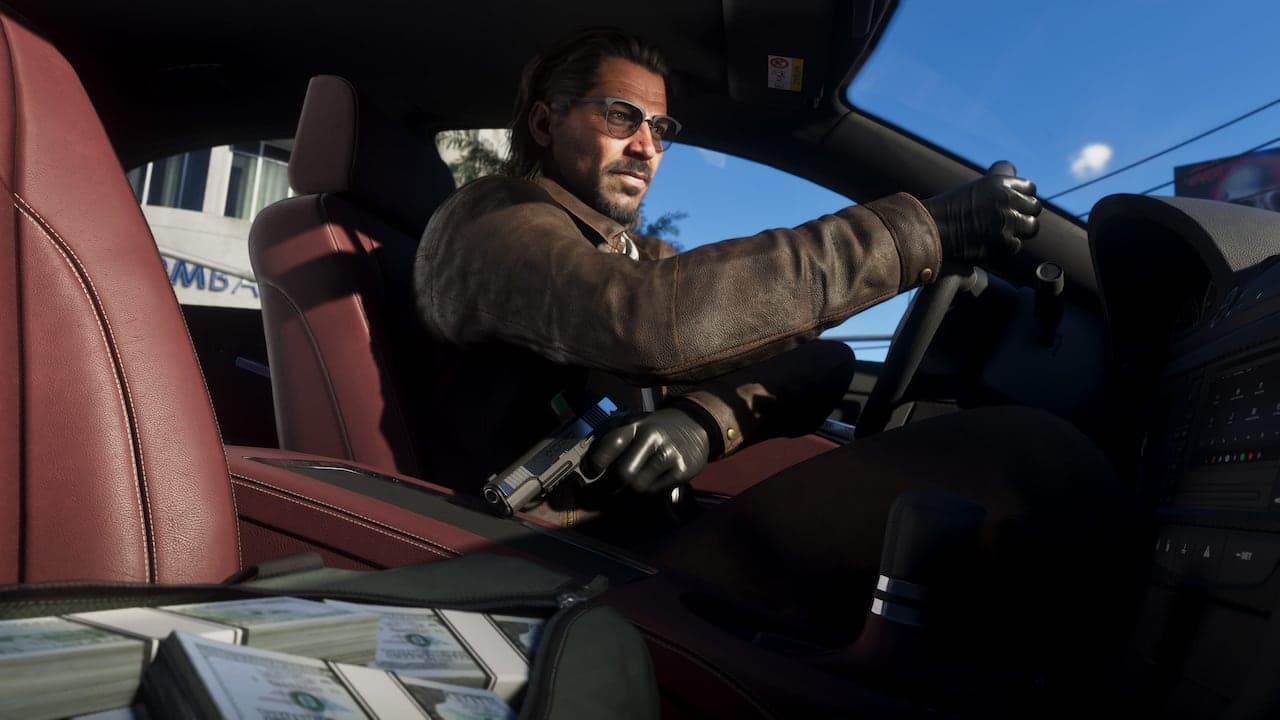
The second sequence is the set piece. Bautista — the career bank robber Rockstar introduced on the Only in Leonida pages — runs the job from the back seat while Lucia drives and Jason shoots. Police cars come apart against traffic, a helicopter joins, and the escape ends with the crew swapping into an unremarkable van and putting a Molotov through the car they arrived in.
- Driving for Bautista
Jason and Lucia work as getaway drivers for Raul Bautista, who directs them from the back seat. They lose a four-star pursuit, burn the getaway car, leave in a van, and are paid afterwards.
Seen in official material
Burning the getaway car is the moment worth being careful about. It is plainly a deliberate act of disposal, and it is one scripted sequence — it is not evidence of a general system for shedding police attention by destroying evidence, however much it looks like the seed of one.
The Megamundo tower
The third sequence puts the pair in suits. They are hired as security for a media executive arriving by private jet for the Vice City launch of Megamundo, a Spanish-language broadcaster opening its first American headquarters. The executive withdraws to a private meeting, drugs are involved, and then armed men come through the building.
- The Megamundo opening
The pair are hired as security for a media executive at the Vice City launch of Megamundo, a Spanish-language broadcaster opening its first American headquarters. Armed men storm the tower and take hostages, and Jason and Lucia end up fighting on separate floors.
The executive's name is reported rather than published: Rockstar has printed no spelling of it, and the outlets covering the sequence are transcribing what they heard.
Seen in official material
It is the clearest demonstration of the switching system doing narrative work rather than showing off: the two are separated across floors, and the player crosses between two simultaneous fights. Lucia's text — “GUYS EVERYWHERE” — arrives on screen mid-firefight rather than in a cutaway. Game Informer and PC Gamer both name the executive; Rockstar has printed no spelling of it, so this piece does not either.
Police, and the Criminal Profile
The Wanted Level is intact and behaves as it always has. What is new sits behind it. Rockstar's briefings describe a Criminal Profile that accumulates from how you behave rather than from what you are doing this minute — a record of whether you escalate situations or get out of them, which the world then reads you by.
- The Wanted Level
The Wanted Level returns and governs immediate police attention. Four stars are on screen during the Bautista pursuit, which draws patrol cars, a helicopter and a sustained chase across the city.
Four is what the presentation shows. It is not the maximum, and nothing in the broadcast establishes what the maximum is.
- The Criminal Profile
Rockstar's preview briefings describe a Criminal Profile running alongside the immediate Wanted Level, so that a consistent pattern of behaviour changes how the world treats Jason and Lucia rather than only how the police respond to the last thing they did.
PC Gamer reports that violence entered into reasonably does not necessarily count against it, that escalating a situation does, and that small decencies count the other way. Rockstar has published no score, scale or category.
Reported by trusted sources
Seen in official material
PC Gamer, which framed it as a more nuanced descendant of Red Dead Redemption 2's honor system, reports that violence entered into reasonably need not count against you, that being the aggressor does, and that small courtesies — bins, animals — count the other way. That comparison is PC Gamer's and not Rockstar's: the name Rockstar uses is Criminal Profile, and no scale, score or category has been published.
Combat
Gunplay is cover-led and noticeably weightier than Grand Theft Auto V's, with rifles and shotguns doing visible structural damage to the rooms they are fired in. Lucia handles a pump-action one-handed while carrying something in the other, which is a small animation detail that implies a lot about how the game intends to keep you moving.
The closing minutes introduce the one genuinely new combat idea: a slowed-down aiming state that picks out regions of a body in two colours.
- Aiming
A slowed-down aiming mode appears in the closing sequence, picking out regions of a target's body in red and in yellow.
Rockstar has not named the mode and has not said what the two colours mean. Reading them as lethal and disabling is an interpretation, and it is one the analyses that made it are credited with rather than one published here as fact.
Seen in official material
GamesRadar and Kotaku both read the red regions as lethal and the yellow as disabling — a non-lethal option, in other words. It is a reasonable reading of a two-colour overlay and it is a reading. Rockstar has not named the mode, has not explained the colours, and has said nothing about whether a campaign can be played without killing.
Weapons
No weapon in the presentation is named on screen, so every model name circulating tonight is an identification made from a frame. GamesRadar's is the most specific: a Moreland 850 shotgun in the opening raid, a pump-action in Lucia's hands, a Duke 556 assault rifle in the tower, and the Molotov used on the getaway car. Their wider catalogue reaches two dozen weapons across all published footage, several identified from a logo above a magazine or a real-world silhouette.
Those are good identifications and they are not confirmations. Our weapon database records what a game establishes, so nothing here has entered it: the identifications are held on the intelligence record and go to the weapons desk as research rather than as census.
Cars, and getting into them
The single most consequential mechanical change in the broadcast is also the quietest. Walking up to a locked car no longer offers one action. It offers a choice.
- Getting into a car
Stealing a vehicle is no longer one universal action: the presentation offers a choice of ways in at the door, including breaking the window and using a slim jim, and Rockstar's briefings say some vehicles need specialist tools.
- Roads built to be harder
Rockstar says Leonida's roads were deliberately made narrower and closer to real-world scale, so that driving badly costs something.
Dazed reports the vehicle handling team includes people with real race driving experience.
Reported by trusted sources
Seen in official material
The road design deserves its own note. Narrower streets sound like a downgrade and are the opposite: they are what makes speed cost something in a city built for it. Dazed reports the handling team includes people with real race driving experience, and the driving in the pursuit sequence reads accordingly — heavier, less forgiving, more about lines than about throttle.
Elsewhere: a convertible roof raising and lowering as a state rather than a cutscene, visible panel damage accumulating through the chase, and traffic dense enough that the pursuit is fought through it rather than around it.
What there is to do
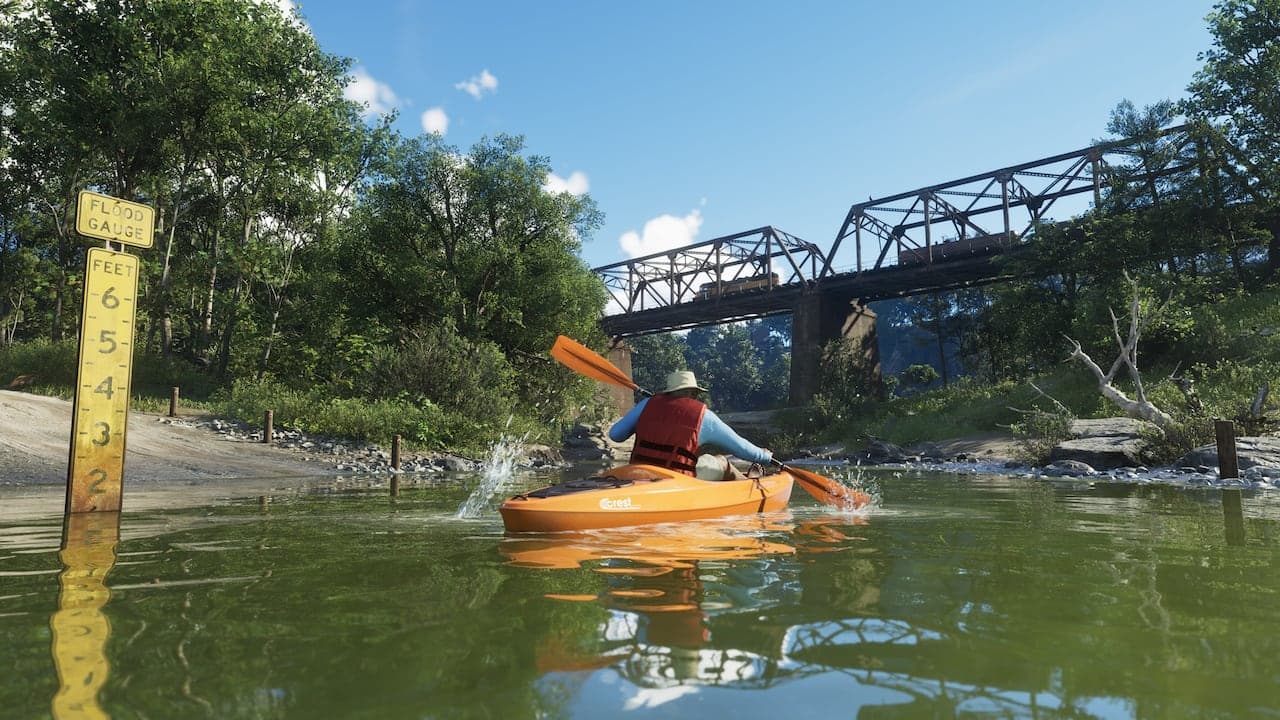
A long montage covers the state's diversions, and it is worth being precise about what a montage proves. It proves the thing is in the game. It does not prove it is an activity with rules, a reward and a reason to return.
- Things to do besides crime
Outside the jobs, the presentation shows fishing, kayaking, diving, jet skis and airboats, parachuting, weight training, basketball, a shooting range, circuit and off-road and street racing, nightclubs, and backyard wrestling.
Most of these appear in a montage. That they are in the game is what the footage supports; that each is a repeatable activity with its own rules is not, and Game Informer's own account of them is careful to call them potential.
Seen in official material
Two of them are shown as more than scenery. Racing carries a real interface — lap counts, positions, timing — across circuit, off-road and night street events. And weight training connects straight back to the body system: it is the input to something Rockstar has separately said is modelled.
Home
Rockstar's ambition for safehouses is the RDR2 camp rather than the GTA V wardrobe-and-save-point, and the apartment sequence is the argument for it: a fridge that opens and has things in it, a television playing something, clutter that has clearly accumulated rather than been placed.
- Safehouses
Rockstar says safehouses are built to be far more interactive than a traditional Grand Theft Auto save point — in their comparison, closer to the camps of Red Dead Redemption 2 in how much they feel like a home.
Reported by trusted sources
What Rockstar has not said is what any of that is for. Camp comparisons invite talk of upgrades, chores and crafting, and none of those words has been used about this game by anyone at Rockstar.
The world, and the people in it
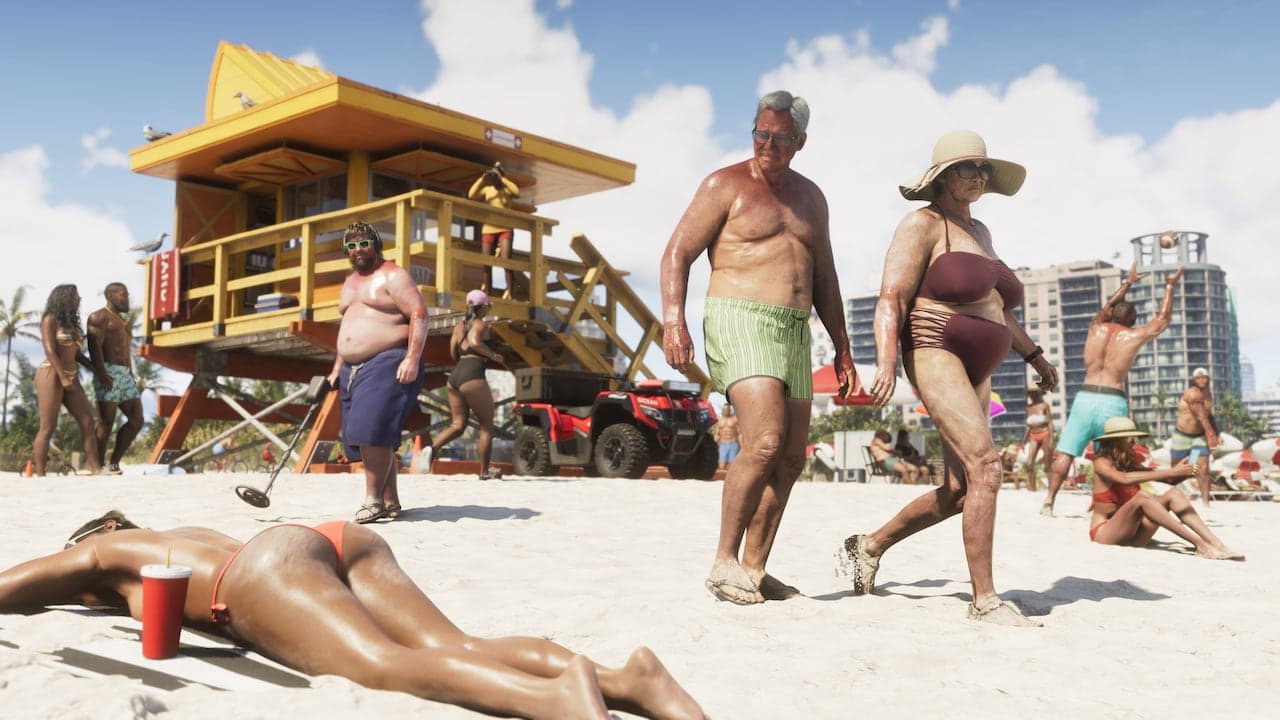
The crowd is where the generational gap is most obvious. Beaches, rooftops and clubs are populated by people who differ in build, age and dress, and who are dressed for the part of the state they are standing in. Rockstar's account of how that was made is the most revealing thing in the Dazed feature.
- The crowd
Rockstar says new tools were built for the series' most varied population, spanning body types, ages, tattoos, piercings and clothing that changes with where in the state you are.
Dazed reports that a Rockstar studio is given over almost entirely to the people who walk around in this game.
- Researched on the ground
Rockstar says teams have travelled to Miami and the surrounding area repeatedly over the past decade, and that the studio keeps a research presence in the city.
- Murals by the people who paint them
Rockstar says more than fifty working street artists were commissioned to produce murals for the game.
Reported by trusted sources
Behaviourally, briefings describe reactions that vary rather than one panic animation — some people run, some hold their ground, some square up. The footage is consistent with that and does not on its own establish it, and it certainly does not establish that every pedestrian is individually simulated, which is a claim nobody at Rockstar has made.
Wildlife is genuinely present rather than decorative: birds working the shoreline, manatees and marine life in the water, wetland fauna in the interior. It is worth separating that from the animals that appear on in-game television, which are a different kind of evidence entirely.
Brands, businesses and old names
Rockstar's interface team describe the fictional brands as an interconnected culture rather than a run of one-off jokes, and the presentation bears that out. Jack of Hearts, Megamundo, Sprunk, eCola, Fleeca and Gruppe Sechs all appear. High-resolution passes have pulled out more: Tucker's Citrus Farms, W. Blanco's Cuban Foods, Gadgets, Azteca Gold. Dazed names a fashion line-up around them — Stock 305, Nola, Ferruccio Tucci, This/That, Caliber, Blagueurs.
A named brand is not a shop you can walk into, and none of these has been established as a location. For returning-player value the clearest sighting is a Love Fist shirt. Azteca Gold has been read by some observers as a nod to Red Dead; the name and logo are identified, the connection is theirs, and Rockstar has confirmed nothing of the kind.
Phones, feeds and the interface
The phone is not a menu you retreat into. It is used while driving, read mid-firefight, and — in the sequence Game Informer describes best — becomes the mission: a streamer running a challenge from the boot of a stolen car, broadcasting the pursuit she is inside, comments scrolling as it happens.
- Social feeds are playable
The in-game social feeds are working interfaces rather than set dressing: a live stream, its scrolling comments and the phone it runs on all appear inside active gameplay rather than in a cutaway.
Game Informer reports a sequence in which the pair take a car with a streamer in the boot, and the pursuit that follows is broadcast on the streamer's own feed.
- Context-sensitive interaction
A prompt system runs through the whole presentation, offering specific actions on whatever is in front of the player — people, animals, vehicle doors, lifts, and objects around the flat.
Seen in official material
The HUD itself is conventional and clean: minimap, GPS route, wanted stars, weapon and ammunition, a reticle, contextual prompts, a weapon wheel, and a separate interface for clothing and masks. One detail has been widely noticed and is worth stating carefully — the minimap appears to render buildings with height and shape rather than as flat footprints. That is an observation about how it looks, not a confirmed feature.
The small things
The apartment repays a frame-by-frame pass better than anything else in the broadcast, and Kotaku have done it. The fridge is covered in notes apparently written by Lucia — “HYDRATE! Drink that water”, “NO MORE SNACKING”, “You are STRONG”, “Work Out Every Day” — alongside photographs, magnets, a bill reminder and what looks like a recipe.
Inside it: Sprunk and eCola, a beer called Logger, Blitz Berry and Blitz Green, a protein drink, water, and a tub of spreadable butter that is close to the only actual food in there. The kitchen around it has a toaster, coffee equipment, a knife block, spices and unwashed dishes.
None of that is a mechanic and it should not be written up as one. It is characterisation, and it is unusually well aimed: a fridge full of energy drinks under a note reading “NO MORE SNACKING” is doing the same work as Rockstar's separate confirmation that food and exercise change how these two look.
- A contextual prompt to hurry Lucia along while she gets ready, reported by VGC.
- A prompt to hold hands during the rooftop meeting with Brian Heder, and a contextual smoke during the conversation.
- Fingerprints and wear around light switches; chipped, cracked and stained floor tiles that run across sections rather than repeating.
- Cardboard laid over the floor of the corporate space, the way it is in a building that has not finished being fitted out.
- A lift ridden rather than cut away from, during the opening job.
- Contextual options on a dog, reported by detailed analyses as including greeting and scolding it.
- Blood and impact marks that persist on surfaces after a fight, in high-resolution passes.
What the Extended Look does not settle
This is the section most reveal coverage leaves out, and after twenty-six minutes it is shorter than it was — but it is not empty, and several of the gaps are being filled in elsewhere tonight with things nobody has established.
- The maximum wanted level. Four stars were shown. One outlet reports six. Rockstar has said nothing.
- How the Criminal Profile is expressed to a player — whether it is visible at all, and what it changes.
- Anything about an online component: whether one exists at launch, what it is, or when.
- Any platform beyond PlayStation 5 and Xbox Series X|S, including PC.
- How large the map is. Figures are circulating; none of them comes from Rockstar.
- How long the story is, and how much of the state is open from the start.
- Whether the two-colour aiming overlay amounts to a non-lethal option, and whether the campaign accommodates one.
- Which of the montage's activities are systems with rules, and which are scenery.
One further item sits between the two categories. VGC reports that the game runs at thirty frames per second on console with no performance mode at launch. That is a specific, checkable claim from a reputable newsroom and Rockstar has published nothing about frame rate, so we hold it as a report rather than a fact.
Evidence note: We distinguish between details directly stated by Rockstar, details clearly visible in official footage, and information reported through sanctioned developer access. Where evidence conflicts, we say so.